Can You Take Nootropics with Coffee? What to Know Before You Stack
| Usually yes | For most everyday, non-stimulant nootropics, taking them with your morning coffee is generally fine and convenient. |
| Watch total caffeine | If your nootropic also contains caffeine, count it together with your coffee, tea and soft drinks. |
| Follow the label on food | Some ingredients go with food, some away from it — the coffee itself is rarely the issue. |
| Keep it to the morning | Caffeine late in the day can disturb sleep, which matters more for memory than any pill. |
It is one of the most practical questions people ask once a bottle arrives: can you take nootropics with coffee? For millions of people coffee is the immovable centre of the morning, so it is only natural to wonder whether your new daily capsule and your first cup can share the same ten minutes. The short answer for most everyday nootropics is yes — but there are a few sensible things to know before you make it a habit, and this guide walks through all of them.
As always, one rule sits above the rest: your product's label is the final word. Directions vary between formulas, so treat the general guidance here as a starting point and follow what is printed on the bottle you own. If you take medication or manage a health condition, run the plan past your doctor first.
The short answer: usually yes, with one thing to watch
For most everyday, non-stimulant nootropic supplements, taking your capsule with your morning coffee is generally fine — and genuinely convenient, since anchoring the dose to your coffee is a great way never to forget it. The two are largely doing different jobs: the coffee is a quick caffeine lift, and a daily nootropic is steady, cumulative support building in the background. There is no general reason the cup and the capsule cannot coexist.
The one thing worth watching is total caffeine. Plenty of nootropic products contain caffeine themselves. If yours does, then your coffee and your capsule are both caffeine sources, and they add up. That is not a reason to avoid the combination — it is a reason to keep an eye on the daily total, which we cover below.
Does coffee stop a nootropic from working?
This is a common worry, and for most everyday capsules it is largely a myth. There is no blanket rule that coffee neutralises a nootropic. What actually matters is your label's food directions: some ingredients are meant to be taken with a meal, others away from food. Coffee with breakfast usually satisfies a “take with food” instruction just fine. If a label gives specific timing directions — for example, take on an empty stomach, or take away from certain nutrients — follow those precisely, but do not assume a normal cup of coffee is a problem unless the label says so.
The famous pairing: caffeine and L-theanine
No discussion of coffee and nootropics is complete without the pairing everyone talks about: caffeine plus L-theanine. L-theanine is an amino acid found naturally in tea. Many people report that combining it with caffeine takes some of the jittery, wired edge off the stimulation while keeping the alertness, producing a calmer, smoother kind of focus. It is one of the most popular everyday nootropic pairings precisely because it plays so nicely with coffee.
This is the one stack with real trial evidence behind it. A 2025 systematic review and meta-analysis of randomised controlled trials found that L-theanine combined with caffeine produced measurable effects on attention outcomes in healthy participants, with the combination behaving differently from either compound alone (Payne et al., Nutrition Reviews, 2025).
Two caveats keep it honest. First, individual responses vary — not everyone feels the same smoothing effect. Second, it is still everyday support, not a magic switch; it will not manufacture focus out of a terrible night's sleep. If you are weighing caffeine against a daily supplement more broadly, our comparison of nootropics vs coffee for focus lays out how each one really behaves.
Easy to slot into your coffee routine
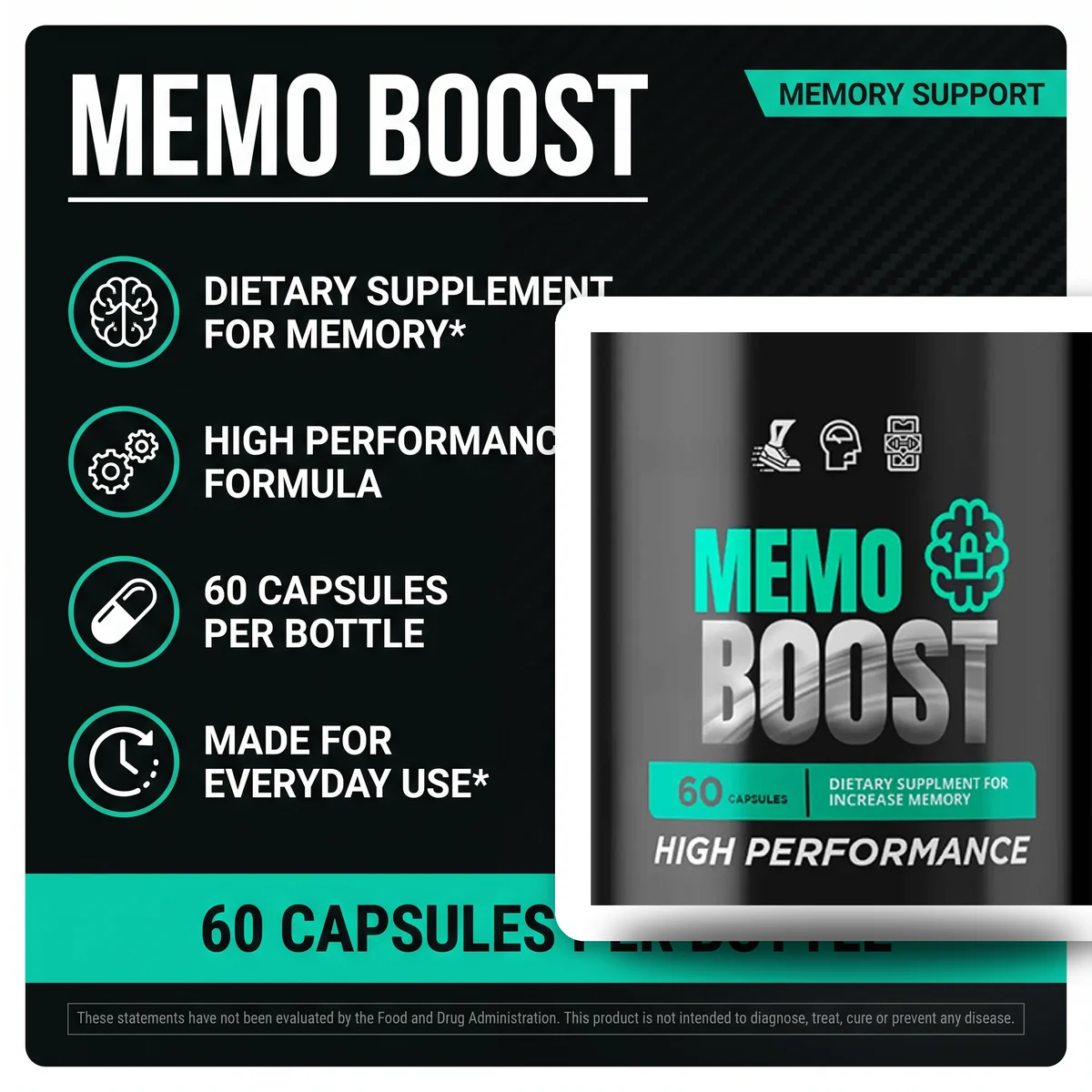
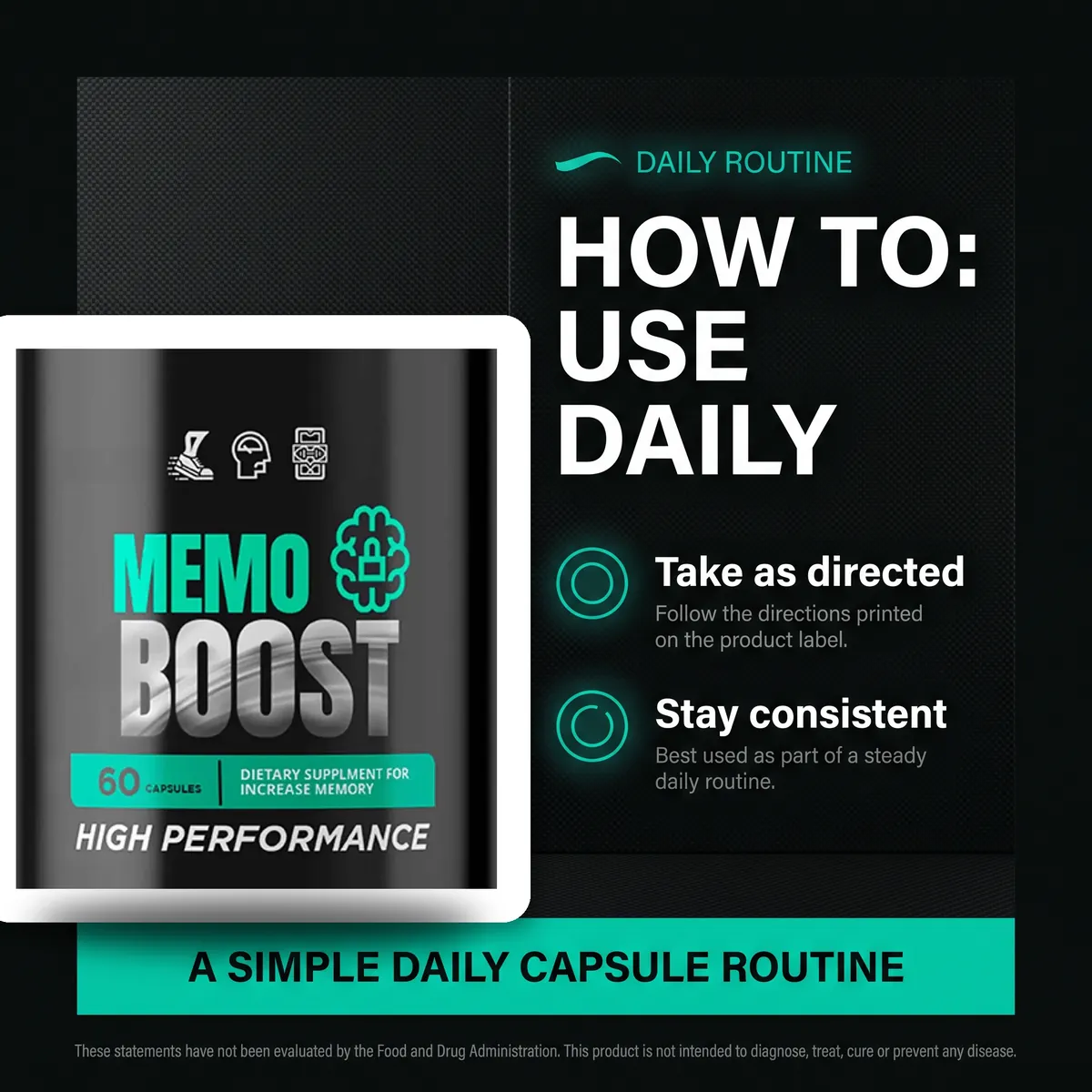
Memo Boost is a single daily nootropic capsule you can take right alongside your morning coffee. Made in the USA in a GMP-registered facility, with transparent labelling and a 60-day money-back guarantee.
See Memo Boost PackagesHow to watch your total caffeine
If you are combining coffee with a caffeine-containing nootropic, a little arithmetic keeps you comfortable. Health authorities generally consider up to about 400 mg of caffeine a day — roughly three to four cups of coffee — to be moderate for most healthy adults. Sensitivity varies enormously, though, and some people feel plenty from far less.
Total daily intake is the number that matters, not the number of capsules. The FDA cites 400 mg a day — roughly four or five cups of coffee — as the amount not generally associated with negative effects in healthy adults, while noting that sensitivity varies widely between individuals (U.S. Food and Drug Administration).
- Tally every source. Coffee, tea, energy drinks, some soft drinks, chocolate and any caffeine in your nootropic all count.
- Read your supplement's label for its caffeine content, if any, and add it to the total.
- Notice your own signals. Jitters, a racing heart, or trouble sleeping mean you have had too much for you, regardless of the number.
- Be extra conservative if you are pregnant or nursing, caffeine-sensitive, or managing a health condition — and check with a doctor.
Mind the clock: keep caffeine in the morning
Caffeine can linger in your system for many hours, which is why afternoon and evening caffeine — whether from a late coffee or a stimulant nootropic — is the most common sleep-wrecker people overlook. And since good sleep does more for memory and focus than any capsule, protecting it is non-negotiable. The simple fix is to keep your coffee and any caffeine-containing supplement to the morning and early afternoon. For a fuller routine, see our guide on the best time to take a nootropic.
The evidence for an early cut-off is unusually clean. Caffeine taken six hours before bedtime still reduced objectively measured sleep, and the people affected largely did not report noticing it (Drake et al., Journal of Clinical Sleep Medicine, 2013). Self-report is not a reliable guide to your own caffeine curfew.
When to be cautious
A few situations call for a more careful approach rather than a casual stack. If your nootropic is stimulant-heavy and you are already a big coffee drinker, the combined caffeine load is the thing to manage. If you are sensitive to caffeine, start low and see how you feel. And if you take prescription medication or have a heart, blood-pressure, anxiety or sleep concern, talk to your doctor before combining anything — supplements can interact with medicines. For the broader safety picture, our guide on whether nootropic supplements are safe is a good next read.
If the reason you are asking is that the coffee habit itself has started to feel non-negotiable, that is a fair question and we answer it separately in are nootropics addictive, which covers where caffeine genuinely differs from a herbal capsule.
The bottom line
For most people and most everyday nootropics, yes — you can take your capsule with your coffee, and doing so is a tidy way to lock in the daily habit. Keep one eye on your total caffeine, follow the food directions on your label, hold caffeine to the morning to protect your sleep, and check with your doctor if you are on medication. Do that, and the cup and the capsule make comfortable companions.
Keep the daily habit stocked
Pairing your capsule with your coffee only works if you never run out. Memo Boost multi-bottle packages lower the per-bottle cost and keep the routine going — backed by a 60-day money-back guarantee.
 Order Memo Boost Today
Frequently asked questions
Can you take nootropics with coffee?
For most everyday, non-stimulant nootropic supplements, taking them alongside your morning coffee is generally fine and even convenient, since the two do different jobs. The main thing to watch is your total caffeine for the day — if your nootropic also contains caffeine, count it together with your coffee so you do not overdo it. Always check your product's label and, if you take medication or manage a health condition, ask your doctor.
Does coffee stop nootropics from working?
There is no general rule that coffee blocks an everyday nootropic. Some ingredients are taken with food and some away from it, so the practical concern is following your label's food directions rather than the coffee itself. Coffee is mildly acidic and contains caffeine, but for most everyday capsules it does not neutralise the supplement. When a label gives specific timing directions, follow those.
What is the caffeine and L-theanine combination?
Caffeine paired with L-theanine, an amino acid found in tea, is one of the most talked-about nootropic pairings. Many people find L-theanine takes some of the jittery edge off caffeine while keeping the alertness, giving a smoother kind of focus. It is a popular everyday combination, but it is still support, not a magic bullet, and individual responses vary.
How much caffeine is too much?
Health authorities generally consider up to about 400 mg of caffeine a day — roughly three to four cups of coffee — to be moderate for most healthy adults, though sensitivity varies widely and some people should have much less. If your nootropic contains caffeine, add it to your coffee, tea and soft drinks when tallying the day's total. Pregnant or nursing people and those sensitive to caffeine should be far more conservative and check with a doctor.
Should I avoid caffeine in the afternoon?
Often, yes. Caffeine can linger for hours, so caffeine late in the day — from coffee or a stimulant nootropic — can disturb sleep, and good sleep does more for memory than any supplement. Keeping caffeine to the morning and early afternoon is a simple way to protect your sleep while still getting the daytime lift.
References
- Payne ER, et al. (2025). Effects of tea (Camellia sinensis) or its bioactive compounds l-theanine or l-theanine plus caffeine on cognition, sleep, and mood in healthy participants: a systematic review and meta-analysis of randomized controlled trials. Nutrition Reviews. PMID 40314930
- Drake C, Roehrs T, Shambroom J, Roth T (2013). Caffeine effects on sleep taken 0, 3, or 6 hours before going to bed. Journal of Clinical Sleep Medicine, 9(11). PMID 24235903
- Nehlig A (2010). Is caffeine a cognitive enhancer? Journal of Alzheimer’s Disease, 20(S1). PMID 20182035
- U.S. Food and Drug Administration. Spilling the Beans: How Much Caffeine Is Too Much? fda.gov
- National Center for Complementary and Integrative Health. Using Dietary Supplements Wisely. nccih.nih.gov
- National Institutes of Health, Office of Dietary Supplements. Dietary Supplements: What You Need to Know. ods.od.nih.gov
† These statements have not been evaluated by the FDA. This product is not intended to diagnose, treat, cure or prevent any disease. This article is for general information only and is not medical advice.