When Is the Best Time to Take a Nootropic? A Simple Timing Guide
| Morning is the sensible default | Often with breakfast, so support lines up with the part of the day you most want it. |
| Follow the label on food | Many everyday capsules go with a meal; some ingredients absorb better with a little fat. |
| Mind the stimulants | Anything with caffeine is best kept away from the late afternoon and evening so it does not disturb sleep. |
| Consistency beats the perfect hour | Attach it to a habit you already have and take it every single day. |
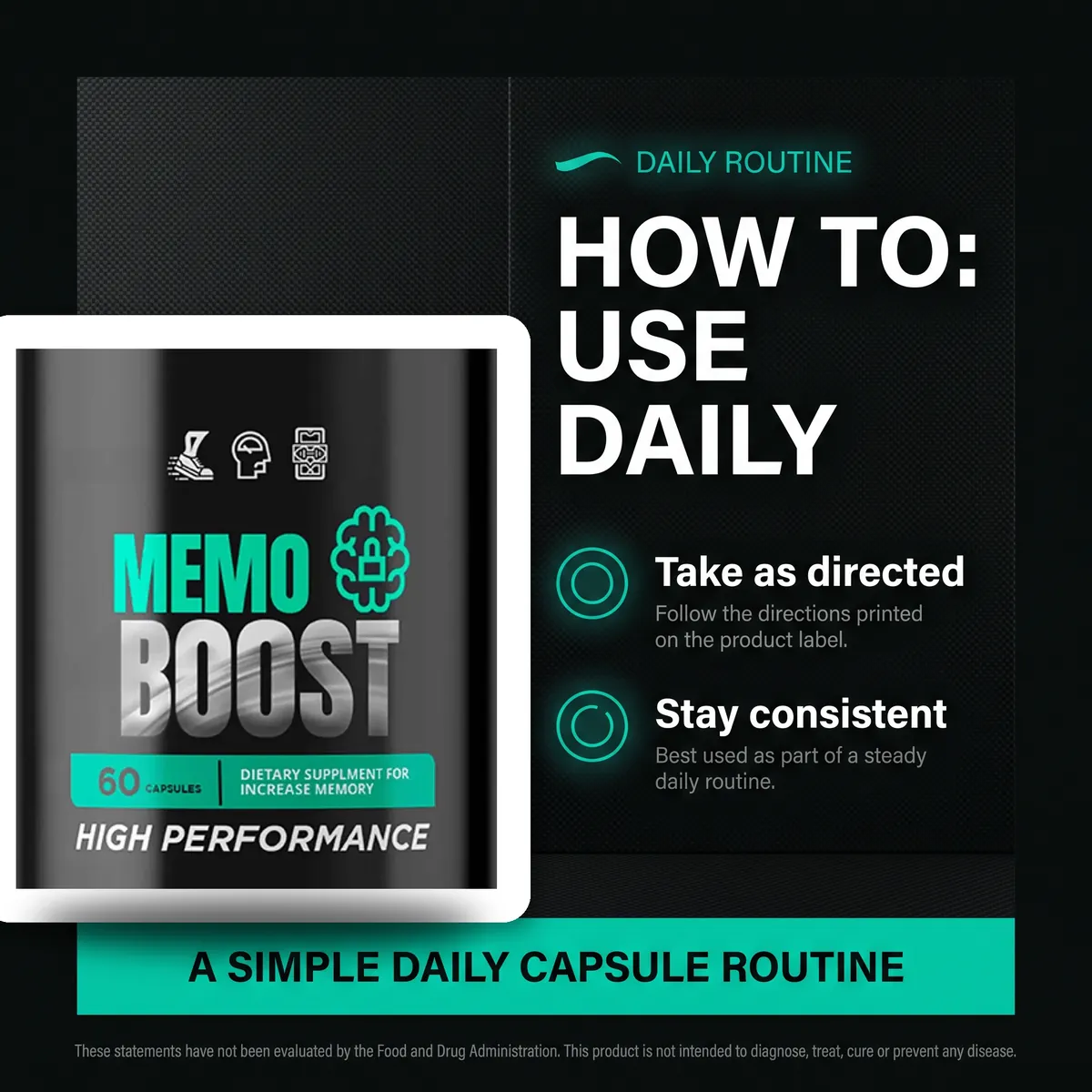
Once you have chosen a memory supplement, the next question is surprisingly common: when is the best time to take a nootropic? Morning or night? With food or on an empty stomach? Before the coffee or after? It is a fair thing to wonder, because timing feels like it should matter a lot. The honest answer is that timing matters a little — and consistency matters enormously. This guide covers both, so you can set up a routine that actually sticks.
One rule sits above everything that follows: the label on your product is the final word. Directions differ between formulas, so whatever a general guide like this suggests, always follow what is printed on the bottle you actually own. With that said, here is how to think about timing.
Morning vs evening: which is better?
For most everyday nootropic supplements, the morning is a sensible default. The logic is simple: you take it near the start of the day, so any daytime support lines up with the hours you most want to feel focused — work, study, errands, the school run. Anchoring it to breakfast or your first coffee also makes it almost impossible to forget, which matters more than the exact hour.
The strongest argument for morning dosing has nothing to do with absorption and everything to do with sleep. Sleep loss degrades attention, working memory and next-day learning, which undoes whatever a supplement was meant to support (National Heart, Lung, and Blood Institute). Anything in your routine that risks the evening is worth moving forward.
Evening dosing is a different story and depends entirely on the formula. A gentle, non-stimulant everyday nootropic may be perfectly fine later in the day. But if a product contains caffeine or other stimulating ingredients, taking it late can interfere with sleep — and since sleep does more for memory than any capsule, that is a poor trade. When in doubt, keep it to the morning. If your product is stimulant-free, you have more freedom to pick whatever time you will remember.
With food or on an empty stomach?
Again, the label leads. That said, there are a few useful principles:
- With a meal is gentle and easy to remember. Many everyday capsules are taken with food, which is kinder on a sensitive stomach and naturally anchors the dose to breakfast.
- Some ingredients prefer a little fat. Fat-soluble nutrients are generally absorbed better alongside a meal that contains some fat, so “with breakfast” is a reasonable default for many blends.
- Empty-stomach dosing suits some formulas. A few ingredients are directed to be taken away from food. If your label says so, follow it.
If the label is silent on food, taking your capsule with breakfast is a safe, easy, forget-proof choice for most people.
Timing around coffee and caffeine
Plenty of people take their nootropic and their morning coffee at roughly the same time, and for most everyday, non-stimulant supplements that is fine — the two are doing different jobs. The thing to avoid is stacking multiple stimulant sources late in the day. If your nootropic itself contains caffeine, count it toward your daily total and keep the combined load out of the evening. We go deeper on this in our guide to whether you can take nootropics with coffee, and on the broader question of nootropics vs coffee for focus.
If your capsule shares a moment with coffee, the coffee is the part with a clock on it. In a controlled trial, a 400 mg dose of caffeine taken six hours before bed still measurably reduced total sleep time, and participants often failed to notice the disruption they were objectively experiencing (Drake et al., Journal of Clinical Sleep Medicine, 2013).
Timing around workouts and demanding tasks
Some people like to line their dose up with a workout or a big block of focused work, on the theory that they want support exactly when they are pushing hardest. For a daily, cumulative nootropic this is mostly a matter of preference rather than a rule — the support is building steadily in the background either way, so a single day's timing around one task will not make or break it. If syncing your capsule to your morning gym session or your first deep-work block helps you remember it, that is reason enough to do it.
One capsule, one time, every day
Memo Boost is designed to make timing easy: a single daily nootropic capsule you can anchor to breakfast and forget about. Made in the USA in a GMP-registered facility, with a 60-day money-back guarantee.
See Memo Boost PackagesWhy consistency beats the “perfect” time
Here is the part that matters most, and the part most timing questions overlook. An everyday nootropic is cumulative — it rewards steady daily use, not clever scheduling. Taking it at 7am versus 9am makes almost no practical difference. Taking it every single day versus a few times a week makes all the difference in the world. If you want to understand why, see our guide on how long nootropics take to work, which explains how the support builds over weeks.
The trials that report anything at all use daily dosing sustained over weeks, not clever scheduling — a pattern visible across the herbal and nutritional cognition literature in older adults (Cave et al., Systematic Reviews, 2023). The hour you pick matters far less than whether you are still picking it in week eight.
So the real skill is not finding the magic hour — it is building a routine you will never skip. The most reliable trick is habit stacking: attach your capsule to something you already do without fail. Take it right after you start the coffee machine, next to your toothbrush, or with the first bite of breakfast. Keep the bottle where you will see it at that moment. Once the dose is tied to an existing anchor, you stop relying on memory and start relying on routine — which is exactly what an everyday supplement needs.
A simple timing routine you can copy
- Pick one anchor. Breakfast, first coffee, or your morning teeth-brushing.
- Take one serving as directed, with food if the label suggests it.
- Keep stimulants out of the evening if your formula contains any.
- Do it every day, even weekends, and judge the results over weeks — not one afternoon.
- If you miss it, take it later that day unless the label says otherwise, and never double up.
Do that, and you have solved the timing question about as well as it can be solved. The best time to take a nootropic is the time you will actually take it — every day.
Once the timing is settled, the next question is what you should be watching for — our guide to telling whether a nootropic is working covers how to set a baseline before you start rather than after.
Make the daily habit easy to keep
A routine is easier to keep when you are not constantly re-ordering. Memo Boost multi-bottle packages lower the per-bottle cost and keep your daily habit stocked — backed by a 60-day money-back guarantee.
 Order Memo Boost Today
Frequently asked questions
When is the best time to take a nootropic?
For most everyday nootropic supplements, the morning is a sensible default — often with breakfast — so it lines up with the part of the day you most want to feel supported. But the single most important thing is to pick one consistent time you will not forget and stick to it daily, because these products reward steady routine more than perfect timing. Always follow the directions printed on your product's label.
Should I take a nootropic with or without food?
Follow the label first. Many everyday capsules are taken with a meal, which is gentle on the stomach and easy to remember by anchoring it to breakfast. Some ingredients are fat-soluble and are better absorbed with food that contains a little fat. If your label says with food, take it with a meal; if it is silent, taking it with breakfast is a safe, easy default.
Can I take a nootropic at night?
It depends on the formula. A non-stimulant everyday nootropic may be fine later in the day, but anything containing caffeine or other stimulating ingredients is best avoided in the late afternoon or evening so it does not disturb sleep — and sleep matters more for memory than any supplement. Check the label, and if in doubt keep it to the morning.
Does the exact time of day really matter?
Far less than consistency does. Whether you take it at 7am or 9am matters little; whether you take it every single day matters a great deal, because an everyday nootropic builds its support cumulatively. Attaching it to a habit you already have — coffee, breakfast, brushing your teeth — is the reliable way to never miss a dose.
What if I miss my usual time?
If you remember later the same day, you can usually take it then unless your label says otherwise. Do not double up to make up for a missed day — just resume your normal single daily serving the next day. Follow the directions on your product, and never exceed the recommended amount.
References
- Drake C, Roehrs T, Shambroom J, Roth T (2013). Caffeine effects on sleep taken 0, 3, or 6 hours before going to bed. Journal of Clinical Sleep Medicine, 9(11). PMID 24235903
- Cave AE, Chang DH, Munch GW, Steiner-Lim GZ (2023). A systematic review of the safety and efficacy on cognitive function of herbal and nutritional medicines in older adults with and without subjective cognitive impairment. Systematic Reviews, 12. PMID 37592293
- National Heart, Lung, and Blood Institute. Sleep Deprivation and Deficiency. nhlbi.nih.gov
- National Institutes of Health, Office of Dietary Supplements. Dietary Supplements: What You Need to Know. ods.od.nih.gov
- National Center for Complementary and Integrative Health. Using Dietary Supplements Wisely. nccih.nih.gov
- U.S. Food and Drug Administration. Spilling the Beans: How Much Caffeine Is Too Much? fda.gov
† These statements have not been evaluated by the FDA. This product is not intended to diagnose, treat, cure or prevent any disease. This article is for general information only and is not medical advice.