Best Nootropic Ingredients for Memory: A Buyer’s Guide to What Actually Matters
| Most studied | Bacopa monnieri and ginkgo biloba have the longest traditional-use records for memory support. |
| For calm focus | L-theanine is widely associated with a smooth, non-jittery focus, especially alongside caffeine. |
| Building blocks | Citicoline, phosphatidylserine and omega-3 fats are common brain-nutrition ingredients. |
| What really matters | The dose and transparent labelling matter more than any single trendy ingredient. |
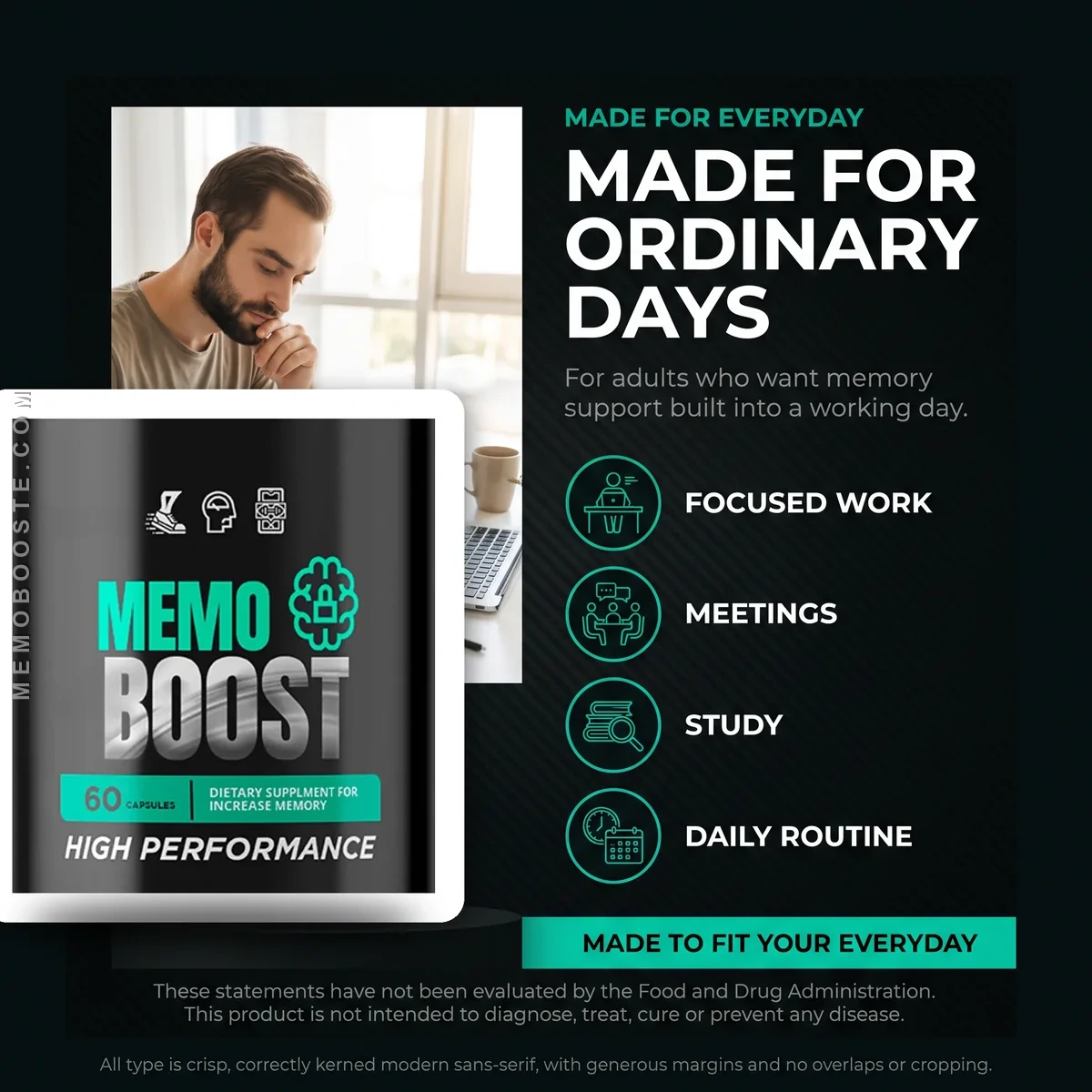
Search for the best nootropic ingredients for memory and you will drown in lists, each one crowning a different hero compound. The truth is calmer and more useful: a handful of ingredients turn up again and again in memory-focused supplements because they have the longest histories of traditional use and the most research behind them. Knowing what they are — and, more importantly, how to judge whether a product uses them properly — turns a confusing label into a decision you can actually make.
This buyer’s guide walks through the ingredients most commonly associated with memory support, what each is traditionally used for, and the two things that matter more than the ingredient list itself: the amount of each ingredient and whether the label is honest about it. None of this is medical advice, and none of these ingredients is a cure for anything — think of them as general, everyday support, not treatment.
The ingredients you will see most often
Here are the compounds that appear repeatedly in memory-focused nootropics, described by their traditional or general use rather than any medical claim.
Two botanicals dominate the memory shelf, and they have now been compared head to head. A 2026 network meta-analysis pooled randomised trials of Bacopa monnieri and Ginkgo biloba and reported differing profiles across cognitive domains rather than one clear winner (Tiemtad et al., Phytomedicine, 2026). NCCIH’s own summary of ginkgo is more cautious still, noting that large trials have not shown it prevents cognitive decline (NCCIH).
Bacopa monnieri
Bacopa is a herb with a long history in Ayurvedic practice, where it has traditionally been associated with memory and learning. It is one of the more studied botanicals in this space. A notable feature is that it is traditionally taken consistently over several weeks rather than for a same-day effect, so it rewards patience and a steady routine.
Ginkgo biloba
Ginkgo is one of the oldest and most recognisable botanicals in the memory category, traditionally associated with circulation and mental sharpness. It is frequently paired with other ingredients in blends aimed at everyday cognitive support.
L-theanine
L-theanine is an amino acid found naturally in tea. It is widely associated with a calm, focused state, and is especially popular paired with caffeine because it is thought to smooth out the jittery edge of a stimulant. If you drink coffee, this pairing is worth understanding — see our guide on whether you can take nootropics with coffee.
Citicoline and phosphatidylserine
These are often described as brain-nutrition ingredients — compounds related to the building blocks and signalling molecules the brain uses every day. They appear regularly in premium memory formulas and are chosen for general support rather than any single dramatic effect.
Omega-3 fats and key B vitamins
Omega-3 fatty acids (particularly DHA) and several B vitamins are foundational nutrients with well-established general roles in everyday brain and nervous-system function. Many people already get some from food, which is exactly why a good supplement is about filling gaps, not replacing a balanced plate.
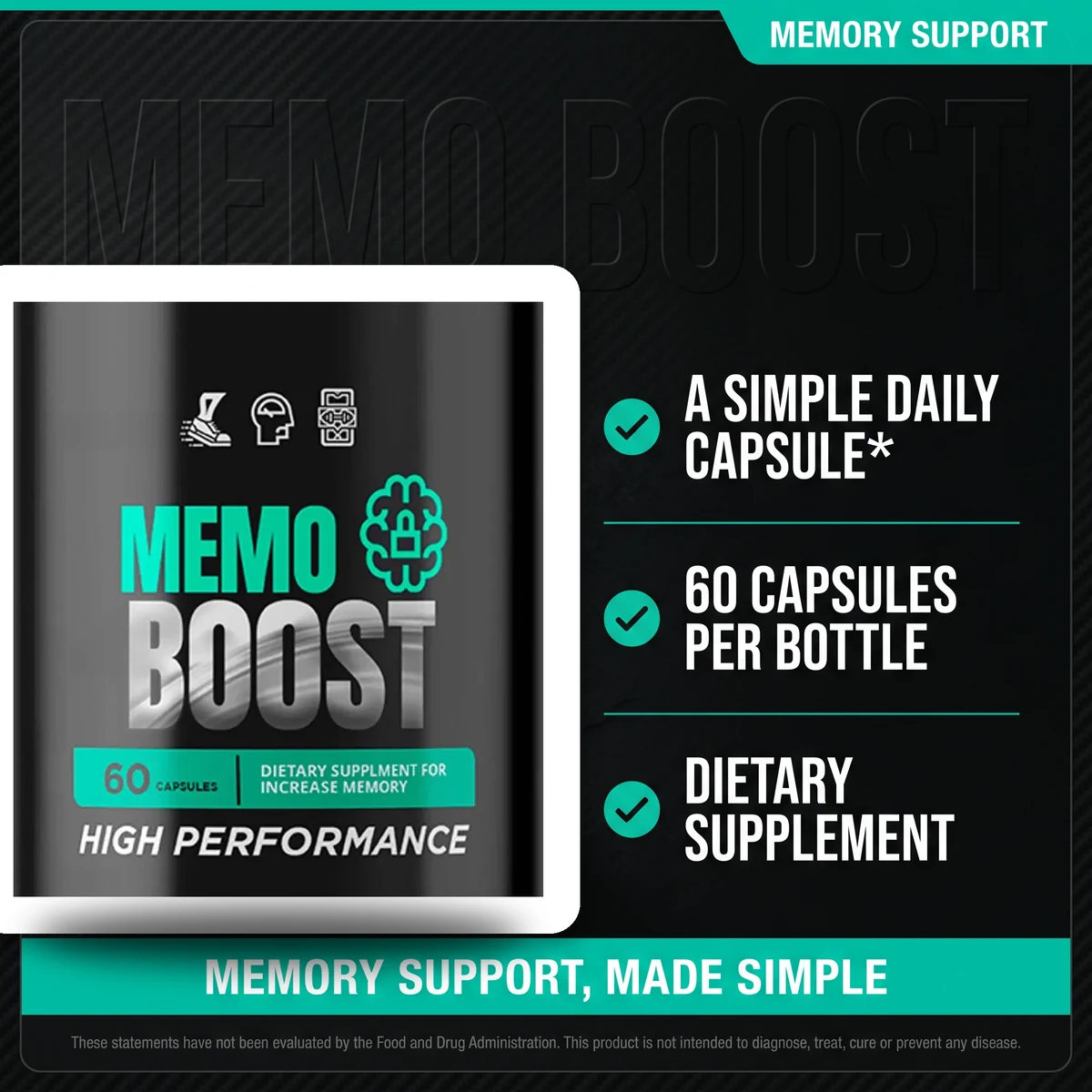
Want these ingredients in one daily capsule?
Memo Boost brings well-known memory-support ingredients together in a single daily nootropic capsule — clearly labelled and backed by a 60-day money-back guarantee.
See Memo Boost PackagesWhy the dose matters more than the name
Here is the part most ingredient lists skip: an ingredient only does anything if it is present in a meaningful amount. A label can proudly list ten fashionable compounds, but if each appears in a trace amount, that list is marketing, not formulation. This is sometimes called “label decoration” or “fairy dusting” — sprinkling in just enough of a trendy ingredient to name it on the front, without enough to matter.
An ingredient name on a front label tells you almost nothing without an amount behind it. The bacopa research is the clearest illustration: the trials that reported memory effects used a standardised extract taken daily for twelve weeks under double-blind, placebo-controlled conditions (Calabrese et al., Journal of Alternative and Complementary Medicine, 2008). A dusting of the same herb for two weeks is not the same intervention.
That is why the single most important thing to check is whether the product discloses the amount of each active ingredient, rather than hiding everything inside a proprietary blend — one lump total that tells you the combined weight but not how much of anything is actually inside. A clear, itemised label is a green flag; a vague proprietary total is a reason to look closer. For the full breakdown of that trade-off, see our comparison of single-ingredient nootropics vs blends.
How to read an ingredient panel like a buyer
- Named amounts, not just names. Each active ingredient should ideally show its own amount, not disappear into a group total.
- Standardised extracts. For botanicals, a standardised extract tells you the active portion is consistent from batch to batch, which is a quality signal.
- Serving size. A per-day amount only means something once you know how many capsules make up a serving.
- Quality marks. Look for signals like third-party testing, GMP-certified manufacturing, and clear country of origin.
- The “other ingredients” line. This is where fillers, flow agents and capsule materials live — useful if you avoid particular ones.
If you want the complete step-by-step checklist for comparing products, our guide on how to choose a memory supplement pulls it all together.
Natural vs synthetic: a common myth
It is tempting to assume “natural” ingredients are automatically better or safer. They are not automatically anything. Natural does not mean stronger, and synthetic does not mean harmful — some of the most reliable ingredients are made in a lab precisely so their purity and amount are consistent. Judge the specific ingredient, its amount and its source, not the reassuring word on the front of the bottle.
Beware the “kitchen sink” formula
A common mistake among first-time buyers is to assume that the product with the longest ingredient list must be the most powerful. In practice, the opposite can be true. A capsule has a finite amount of room, so cramming twenty ingredients into one usually means each is present in a smaller amount than it would be in a focused formula. A shorter list with meaningful, disclosed amounts of a few well-chosen ingredients often beats a “kitchen sink” label that impresses on the front and underdelivers on the back. When you compare two products, do not count the ingredients — weigh them. A formula that commits real amounts to a handful of proven ingredients is making a clearer promise than one hedging its bets across a crowd.
Long lists are easy to print and hard to justify. The NIH Office of Dietary Supplements notes that omega-3 intake is one of the few nutritional levers with a plausible route to brain tissue, and even there the cognitive evidence in healthy adults is inconsistent (NIH Office of Dietary Supplements). If the best-supported ingredients are still uncertain, twenty of them at trace amounts are not a formula — they are a label strategy.
Ingredients are only half the equation
Even the best ingredient list cannot outwork poor fundamentals. Sleep, movement, nutrition and attention do the heavy lifting for memory, and a supplement is there to support — not replace — those habits. Our guide on how to improve memory and focus naturally covers the free basics, and it is worth reading alongside any ingredient shopping. Give any new ingredient a fair, consistent trial too; some, like L-theanine, are associated with a same-day effect, while botanicals such as bacopa are traditionally judged over weeks.
Clearly-labelled memory support, made simple
Memo Boost is a single daily nootropic capsule built around well-known memory-support ingredients — try a multi-bottle package with a 60-day money-back guarantee.
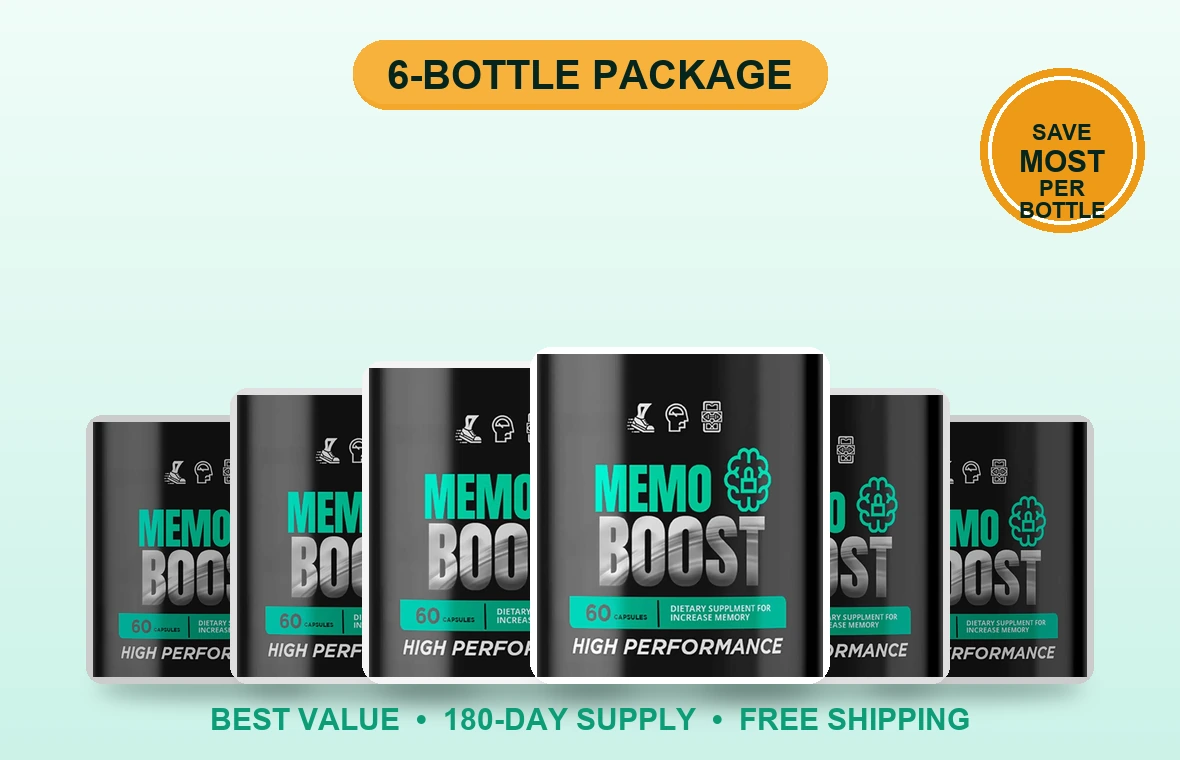 Order Memo Boost Today
Frequently asked questions
What is the most researched nootropic ingredient for memory?
Bacopa monnieri is among the most studied traditional botanicals associated with memory support, with a long history of use in Ayurvedic practice. Being well studied does not guarantee results for any individual, but a longer research record and a track record of traditional use are reasonable things to look for on a label.
How much of each ingredient should a good nootropic contain?
There is no single universal number, because sensible amounts differ by ingredient. What matters is that the label discloses the amount of each active ingredient rather than hiding them inside a proprietary blend, so you can see whether an ingredient is present in a meaningful amount or just sprinkled in for the label.
Are natural nootropic ingredients better than synthetic ones?
Not automatically. Natural does not mean stronger or safer, and synthetic does not mean harmful. What matters more is the amount, the quality of the source, transparent labelling and how the ingredient is traditionally or generally used. Judge the specific ingredient and its dose, not the label word natural.
How long do nootropic ingredients take to work?
It varies by ingredient. Some, such as L-theanine, are associated with a same-day sense of calm focus, while botanicals like bacopa are traditionally taken consistently over several weeks before you would judge them. Give any memory ingredient a fair, consistent trial rather than expecting an overnight change.
Can I get these ingredients from food instead?
Some, such as omega-3 fats and certain B vitamins, are found in everyday foods, and a balanced diet is always the foundation. Others, like specific standardised botanical extracts, are hard to obtain from food in consistent amounts, which is one reason people turn to a supplement. Food first, supplement to fill the gaps.
References
- Tiemtad P, et al. (2026). Comparative effects of Bacopa monnieri and Ginkgo biloba on cognitive functions: a systematic review and network meta-analysis. Phytomedicine. PMID 41678913
- Calabrese C, Gregory WL, Leo M, et al. (2008). Effects of a standardized Bacopa monnieri extract on cognitive performance, anxiety, and depression in the elderly: a randomized, double-blind, placebo-controlled trial. Journal of Alternative and Complementary Medicine, 14(6). PMID 18611150
- Welty FK (2023). Omega-3 fatty acids and cognitive function. Current Opinion in Lipidology, 34(1). PMID 36637075
- National Center for Complementary and Integrative Health. Ginkgo. nccih.nih.gov
- National Institutes of Health, Office of Dietary Supplements. Omega-3 Fatty Acids — Health Professional Fact Sheet. ods.od.nih.gov
- National Institutes of Health, Office of Dietary Supplements. Dietary Supplements for Cognitive Function, Dementia, and Alzheimer’s Disease. ods.od.nih.gov
† These statements have not been evaluated by the FDA. This product is not intended to diagnose, treat, cure or prevent any disease. This article is for general information only and is not medical advice.